
Tuesday, May 26, 2026
Why I Never Spoke to My Son's College Coach Until Drop-Off

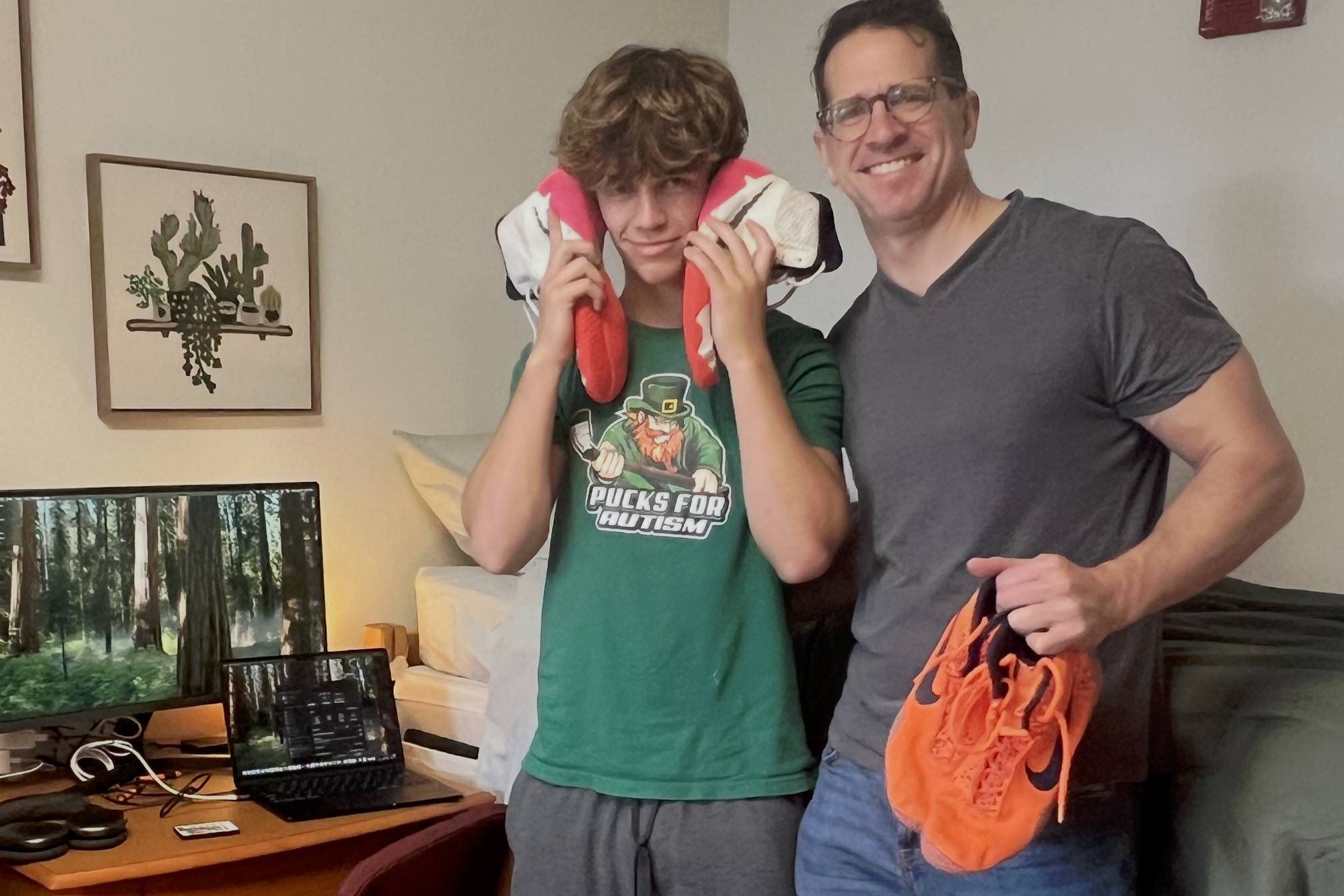
The first time I spoke to my son's college coach was on the sidewalk outside his dorm, helping move boxes.
We shook hands. We talked for about ninety seconds. Then I got back in the truck and drove home.
That was deliberate. I had been his head coach his senior year of high school. I had spent over twenty years officiating IHSA and IESA wrestling. I knew people in the college program he picked. I could have made a call any time in the previous eighteen months.
I never did. Not once. And the reason matters for every high school head coach who is going to have a wrestler go through D1 recruiting in the next few years.
The principle
If my son was going to wrestle in college, it had to be for him. Not for me.
That sounds like a coaching-clinic platitude. It is not. It is a structural rule. The minute a parent, especially a parent with standing in the sport, picks up the phone to a college coach, the recruiting decision starts getting made by the parent. It does not matter how careful the parent is. The relationship between that parent and that college coach is now part of the kid's decision frame. The kid feels it. The college coach uses it. The decision warps.
I was not willing to let that happen. So I made a hard rule for myself, and I held it.
The rule was simple. For any program my son was seriously considering, I would not call the head coach. I would not take a call from the head coach. I would not introduce myself at meets. If our paths crossed in an officials' room or a hallway, I was civil and brief, and I did not bring up my son.
That is how I ended up meeting his eventual college coach for the first time, in person, on move-in day.
Through junior year, I stayed out
I was a volunteer assistant on his high school program before I took over. While I was an assistant, the head coach at the time took the recruiting calls that came in. I stayed out of that room on purpose.
I had watched enough wrestling parents try to drive a recruiting process to know what it looks like from the receiving end. I had stood next to enough D1 coaches in officials' meetings and parking lots after duals to know what they say about parents who lobby. They do not say it kindly.
So through his junior year, I sat in the bleachers. The head coach handled the program's side. My son did his own outreach to the schools he was interested in. I was the parent, nothing more.
Senior year, the calls from other programs
Then I became head coach. The recruiting was not finished. Programs other than the one he eventually chose were still working him for a verbal, and a few schools were calling back to check in.
I took those calls. I opened every one of them the same way.
"Before we talk, you should know I am his father as well as his head coach. I will answer your questions about him the same way I would for any other kid in the program. If at any point that line gets uncomfortable, tell me and I will hand you to one of my assistants."
Nobody ever took me up on it. Every D1 coach who called me said some version of "I appreciate you telling me, let's keep going." And then we had the call. Full match footage. Weight trajectory. Practice work ethic. How he loses. Whether his parents were reasonable, which got a wry answer from me and a laugh from the other end.
The disclosure made it impossible for me to oversell him. That was the point.
The call I never took
For the program he was building a relationship with, the one he eventually committed to, I held the rule.
I did not call. I did not pick up. When that coach reached out about my son, my son handled it. When my son had questions about what the program was offering, he asked the program, not me. When he visited campus, I stayed home.
The first time I spoke to that coach was drop-off. The handshake on the sidewalk.
The result was a recruiting decision my son owns completely. He picked the program. He built the relationship. He understood the terms. When the season got hard freshman year, and it gets hard for everyone freshman year, he could not look across the kitchen table and blame me. The decision was his.
That is the recruiting story I am most proud of, as both his father and as someone who was his head coach for one season.
What I watched happen around us
I had a front-row seat to the part of the process that gets misread, first as an assistant, then as a head coach, and the whole time as an official watching dozens of other families navigate the same thing.
The kids whose recruiting went well had two things in common. The kid did his own work. And the high school coach had his data ready when the phone rang.
The kids whose recruiting went sideways also had two things in common. The parent ran the process. And the high school coach either could not answer the questions the college coach asked, or did not bother to return the call within a week.
That is the whole pattern. It does not change.
The recruiting market in 2026
The recruiting environment has shifted under a lot of high school coaches' feet, so I want to ground this in the world we are in right now.
The D1 wrestling transfer portal window is now thirty days, all of April. College rosters are more fluid than they have ever been. A wrestler who was a starter in March may be in the portal by April 15. The athletes in your room right now are recruiting against transfers, not just other freshmen.
NIL and revenue share are real for wrestling now. Under the House settlement structure, schools can share up to 22% of their athletic revenue with athletes, mostly through collectives, donor groups that work closely with coaches. A kid who was a "preferred walk-on" in the old model may now be a small-dollar NIL kid in the new model.
This matters because the questions families are asking you have changed. They are not just asking "where should I go." They are asking "what is my package going to look like." If you do not have a coherent answer ready, the kid will go online and find one that may or may not be accurate.
The three things college coaches actually want
This is the framework I took into every call I took senior year. It is the framework D1 coaches have described, in their own words, in dozens of conversations at meets over the years.
Full matches against named opponents. Highlight reels lie. Everybody knows it. College coaches want to see the kid wrestle six minutes against a kid they have already evaluated, win or lose. Two losses against ranked opponents tells a college coach more than ten wins against unranked ones. The job of the head coach is to make sure full match footage is available, labeled with date and opponent, and shareable in three clicks. Not a Dropbox folder buried in a parent's Google account. Available.
A weight and growth trajectory the college coach can trust. This is where most kids lose offers. The college coach is sizing the kid for a roster two years from now. If your wrestler is putting up varsity numbers at 132 as a junior, but he is 5'6", the college coach knows where he is going to land. If you are tracking weight honestly across the season, that data is gold. If you let the kid descend two classes to make a tournament, the data is corrupt and the college coach will smell it.
One phone call with the head coach. When a college coach calls you about a kid, you are not selling. You are validating. They have already seen the footage. They have already read the stats. The question they are calling you with is, "Tell me what I cannot see on tape." Practice work ethic. Locker room. How he loses. How he handles a bad call. Whether his parents are reasonable. Whether you would put him in a varsity lineup as a freshman next year if you needed to. Honest answers. The coaches who try to oversell a kid are the coaches who do not get called back the next year for a different kid.
The athlete showcasing checklist
If you are a high school coach, you can adopt this verbatim.
Hand it to every parent of a sophomore or junior who has expressed D1 interest. Have it ready by November of their junior year.
1. Full match footage from the last twelve months, labeled by date, opponent, and weight class, uploaded somewhere shareable.
2. Season-by-season weight log with dates and any certified weigh-in data.
3. A one-page profile with academic GPA, ACT or SAT if taken, current weight, projected weight, and three named coaches who can vouch for the kid.
4. A short list of three to five schools, max, that the kid has actually researched, not just heard of.
5. The head coach's direct number, and a window of times the college coach can call.
That is the package. It is not glamorous. It does not have music behind it. It is the version that gets returned calls.
Why this is a head coach problem
If you are the head coach, you might read this and think, "This is on the parents and the kid."
It is not. The reason it falls to you is simple. The college coach calls you. Not the parent, not the club coach. You.
When that call comes in, the question is whether you can tell that college coach, in fifteen minutes, the things he cannot see on tape. If you can, the kid gets an offer. If you cannot, the kid does not. That is the whole transaction.
If you ever take that call about your own kid, the same job applies, plus the disclosure. And for the program your kid is most serious about, the call you do not take may matter more than the calls you do.
The wrestlers in your room right now are going to be in this conversation eventually. Track the footage. Track the weight honestly. Know the kid well enough to answer the questions a college coach is actually going to ask. And if it is your own kid in that conversation someday, make sure the decision is his. Not yours.
I met my son's college coach at drop-off. That handshake on the sidewalk was the first time he had heard my voice. By design. And it is the decision I would make again every time.
Founding Member · Limited to 100
Lock founding pricing for Year 1.
- Core
- $99
- Plus
- $199
- Complete
- $399
per year
The first 100 programs to sign up lock founding-member pricing for their first year. After Year 1, pricing follows the published rate card.
Live scoreboard