
Tuesday, May 12, 2026
My First Year as a Head Coach: 7 Things Nobody Told Me

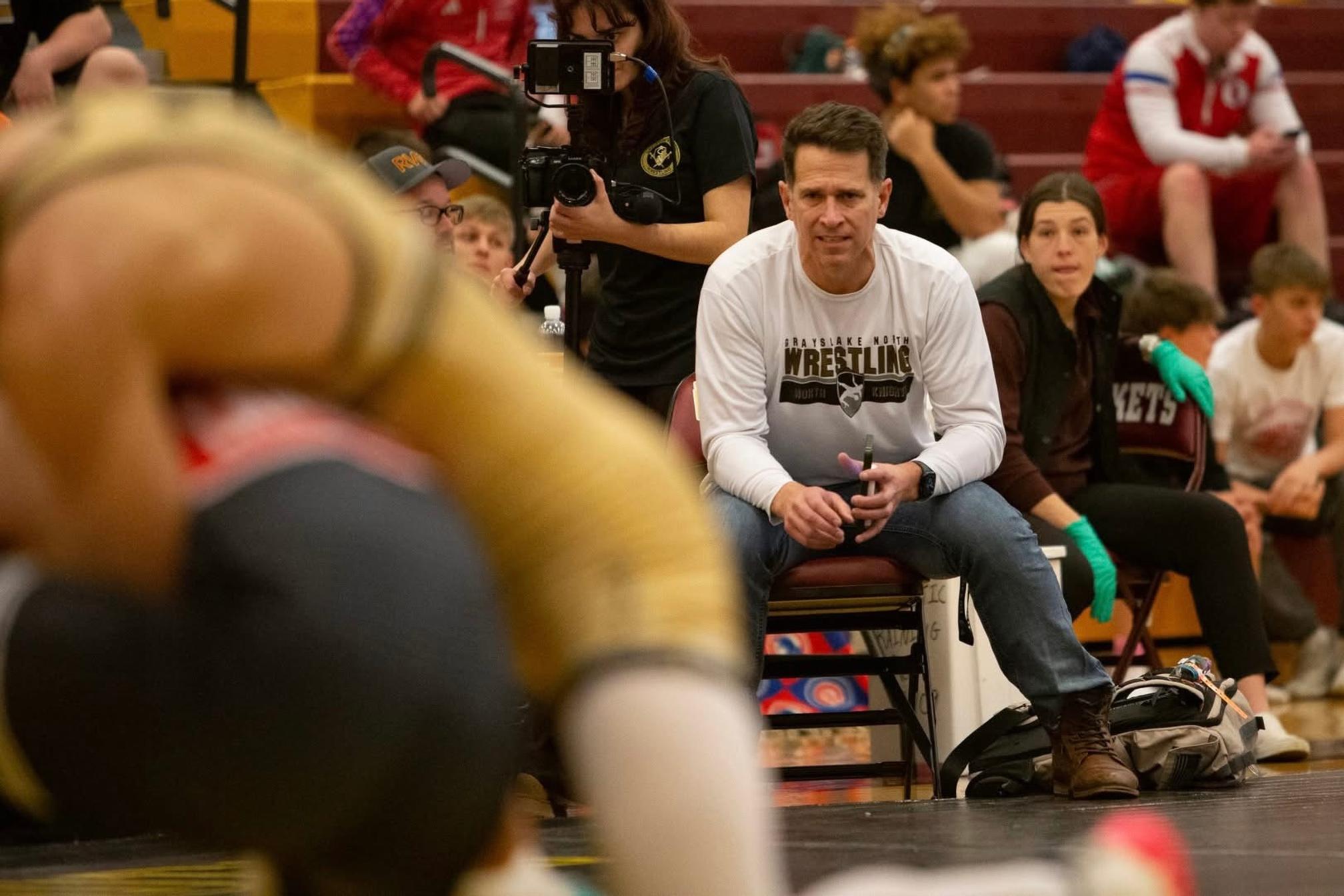
The AD called on a Tuesday afternoon.
I was a volunteer assistant. I'd been around the program for three years. Before that, I'd officiated wrestling in Illinois for two decades, working duals and tournaments at every level from middle school up to state qualifying. I'd coached my son's club team since he was eight, and head-coached him through middle school. I had a day job and a family and a plan for the season that didn't involve being a varsity head coach.
The school had hired a new head coach over the summer. Two weeks into the season, he was gone. The AD wanted to know if I'd take over.
I had a few minutes to decide. I decided in less time than that.
The thing nobody told me, and the frame for this whole post, is that you almost never get to start your first year on your terms. Most first-year head coaches I know didn't get a summer onboarding. They got a phone call. The work that should have happened in August happened in November, on top of practice, on top of duals, on top of a roster of kids who'd just lost their head coach two weeks into their season.
So this is the note I'd send back to the version of me who picked up that call. Seven things, in roughly the order they hit me. Some are operational and some are human, and the human ones matter more. None of them are about technique. None of them are about Xs and Os. There are great resources for those. These are the things that decided whether the season worked, and they were almost never the things I'd been preparing for.
1. You inherit everything. The first week is triage, not vision.
When you walk in mid-season, you don't get to design the season. You absorb it. Weight plans someone else made, a roster you didn't recruit, a lineup philosophy you wouldn't have built, parent dynamics that were already in motion, a competition schedule someone else booked, and an inbox that's been on autopilot for two weeks.
Even if you do get the summer, you still inherit most of this. The program existed before you. The kids were wrestling each other in that room for years. The parents were already talking. The AD already had expectations. You are not starting a program. You are taking over one.
The temptation is to rebuild it to match how you'd have done it. Resist. The first week is triage. Figure out what's actually on fire and needs your attention now, what's not how you'd do it but is working (leave it alone), and what's going to need a real conversation in three weeks once you've earned the standing to have it.
Make the list. Cross things off when you can. Most of the chaos is in your head, not in the program. The program kept running for two weeks without me. It would keep running while I found my feet, as long as I didn't try to fix everything at once.
2. You don't change a varsity room you just walked into.
Your varsity room has been a varsity room for a lot longer than you've been the head coach. The kids have nicknames for each other. They have grudges. They have a settled sense of who's tough and who's soft and who's coachable. They watched the previous guy, and the guy before him, and in my case they had also just watched a coaching change happen mid-season. That meant they were watching me. Closely.
Your job in week one is to watch and listen and resist the urge to change anything that isn't on fire. Take notes. Decide what you actually want to change versus what you only think you want to change because it's different from how you'd do it. The changes you want will land in January if you've earned the room. Try to make them in November, when you've been the head coach for nine days, and you'll lose the room.
The kids will tell you the culture in the first three practices if you pay attention. Watch who walks in first and who walks in last. Watch which kids volunteer for the conditioning circuit and which ones disappear to the water fountain. Watch the senior who corrects a freshman's stance without being asked. That's your real captain whether the title is on him or not.
3. Wrestleoffs are the system. Your job is the edges.
One of the things wrestling does better than most sports is decide its own lineup. We have wrestleoffs. Two kids at the same weight wrestle each other in the room, the winner gets the spot. Nobody is sitting at home wondering whether the coach picked his favorite. The mat decides.
That spared me a lot of conversations my football and basketball coaching friends have to have constantly. I had exactly one parent conversation about a lineup spot all season, and it was about an edge case the wrestleoff system didn't cover.
But the system has edges, and the edges are where the work is. The kid who's been winning all year and gets the flu on wrestleoff day. The kid who's been on a weight class for two months and now wants to challenge up. The injury that takes a starter out and forces a wrestleoff a week before regionals. The kid who's clearly the better wrestler in the room but has academic issues that haven't surfaced yet. These are not wrestleoff decisions. These are coach decisions, and they are the ones that need a phone call.
Set the rules early. Spell them out at your first parent meeting. Tell families what triggers a wrestleoff and what doesn't. Tell them what happens when there's a tie. Tell them how often a spot can be re-challenged during the season. The clearer the system, the smaller the edge cases. And when an edge case does come up, handle it on the phone, in your own voice, before it becomes a parking-lot conversation.
4. Weight management is mostly conversation, and you may be inheriting someone else's pencil math.
Most of the bad weight stories I've seen as an official started the same way. A coach didn't have a real conversation with a kid (and the kid's parents) about a realistic target weight until early December, by which point the kid was already four pounds over with a meet on Saturday, and the family was scrambling, and now the conversation was happening under pressure with everyone on edge.
If you have the summer, have the conversation in September. Set the certification weight realistically, not aspirationally. Talk to the family, not just the kid. Put the plan in writing. Document the descent plan if there is one.
If you walk in mid-season, you don't get the September version. You get whatever the previous coach set up, and the kids and parents may or may not be on the same page about what was actually agreed to. Audit what's in motion in your first three days. Find out which kids have a plan that's working and which ones are running on assumptions nobody wrote down. Have the catch-up conversation with the families who need it before the next certification deadline, not after.
The mid-season weight drama in February is almost always a fall problem that didn't get addressed. The coaches I respect most aren't the ones whose kids cut the most weight. They're the ones whose families don't have weight drama in February because the conversation happened when there was time to handle it well.
5. Your assistant coach and your scorer's table parent matter more than your top wrestler.
You may not get to pick either one. When I took over, I had the people I had, and we figured it out. But the lesson holds either way.
If you do get to pick an assistant, pick for character first and wrestling knowledge second. You can teach wrestling knowledge. You can't teach a person to show up early, stay late, handle a kid's bad day with grace, or hold a confidence. Find someone who does those things and worry about technique later.
And the scorer's table parent is the most overlooked person in the program. From twenty-plus years on the officials' side, I can tell you which programs were going to have a smooth home meet within five minutes of walking into the gym. It was almost never about the head coach. It was about whether the scorer's table was organized, whether the bout sheets were ready, whether the time clock worked, and whether the person running it could communicate calmly with the head official when something went sideways. That person is a volunteer. They are giving you their Saturday. They are deciding, every time they show up, whether your program is worth their Saturday.
Tell both of them they matter. Often. Out loud. In front of other people. The program runs on them, not on you, and they need to know you know that.
6. Parents communicate with the program 24/7. If you don't set the channel, seven channels will set themselves.
When I took over, I walked into seven channels. There was a booster mom's text thread, a freshman parent group chat, a senior parent group chat, an email list the previous coach had been using, a Facebook group somebody set up two years ago, and at least two side conversations that were essentially gossip pipelines. By the end of week one I'd been added to four of them.
Pick one. Tell parents what's on it (schedule, lineups, weigh-in times, weather changes, transportation updates) and what isn't (playing-time complaints, lineup debates, parent-to-parent drama). Be the source of truth for the operational stuff so the side channels die from lack of food. The parents who want a backchannel will still build one. That's fine. But if the program's signal is loud and reliable, the side channels stay small.
One more piece, and this one isn't optional. Any communication that flows directly between an adult coach and a minor athlete through a private channel is a structural problem. It doesn't matter if every message is harmless. It doesn't matter that you've known the kid since youth club. The structure is the problem. The fix is to keep an adult guardian visibly in the loop on every coach-to-minor message, and to use program-level channels rather than personal phones. This isn't paranoia, it's the standard, and you do not want to be the coach who learns this after an incident report instead of before.
7. The senior class is going to test you. They aren't being difficult. They're deciding if they can trust you with their last season.
This was the hardest one to learn, and it's the one I'd most want a first-year coach to hear before they walk in.
Every senior class tests every new head coach. Mine had just lost their head coach two weeks into the season and were now on their second coach in a month, and one of them was my son. They tested me anyway. Every senior class does. They've watched coaches come and go. They've decided who's earned the room and who hasn't. The test is rarely overt. It's a captain who pushes back on a drill he's done a hundred times. It's a four-year starter who suddenly gets quiet. It's the question after practice that's really a different question.
The test is not an attack. It is not a discipline problem. It is a senior class trying to figure out, in the only way they know how, whether you are someone they can trust with what is for them a once-in-a-life four months. They aren't going to get another senior year. They are going to spend it with you. They want to know who you are.
Pass the test by being consistent. Don't try to be their friend. Don't try to be a hardass. Don't try to be the last coach, and don't try to be the opposite of the last coach. Be the same coach on Monday that you were on Friday. Tell the truth in small things so they can trust you with large things. Be in the room before they are. Stay after when one of them needs to talk. They'll figure out the rest.
I had a senior captain sit down next to me on the bus after a tournament in late January and say, almost to himself, "Coach, this is going to be a good February." That was the test ending. It took two and a half months. It was worth every minute.
I'm writing this in May, sitting at my desk thinking about coaches who are about to take over varsity wrestling programs this fall. Some of you will get the planned summer onboarding. Some of you will get a phone call from your AD in November and an hour to decide. Most of what's on this list applies either way.
I'm not coaching this year. I'm building something instead. A lot of what I'm building exists because of what's on this list. The triage. The weight conversation. The seven channels.
But this post isn't about that. It's about you, if you're stepping into your first varsity head-coaching job, whether the call comes in July or in November. You're going to do most of this wrong the first time. So did I. So did every coach I respect. The point isn't to do any of it perfectly. The point is to know what's coming.
I'm putting together a checklist for first-year head coaches that ships at the end of the month: the things I wish I'd had a copy of when I picked up that call. If you want it, the signup form at the top of the page will get you on the list when it drops. And if you've already lived a version of this and have a thing nobody told you, I'd genuinely love to hear it. Comment below, email me, find me on LinkedIn. I'm collecting these.
Brett Anderson is the founder of Scorecrypt and an IHSA/IESA wrestling official with 20+ years on the mat in Illinois. He coached his son's club team from youth through D1 and took over varsity wrestling as a mid-season replacement in his son's senior year.
Founding Member · Limited to 100
Lock founding pricing for Year 1.
- Core
- $99
- Plus
- $199
- Complete
- $399
per year
The first 100 programs to sign up lock founding-member pricing for their first year. After Year 1, pricing follows the published rate card.
Live scoreboard